Customer Login
Article by Ken Fung. August 4th, 2026.
Quantum computers are proving useful when they aren’t asked to work alone. Two results published in July show us why.
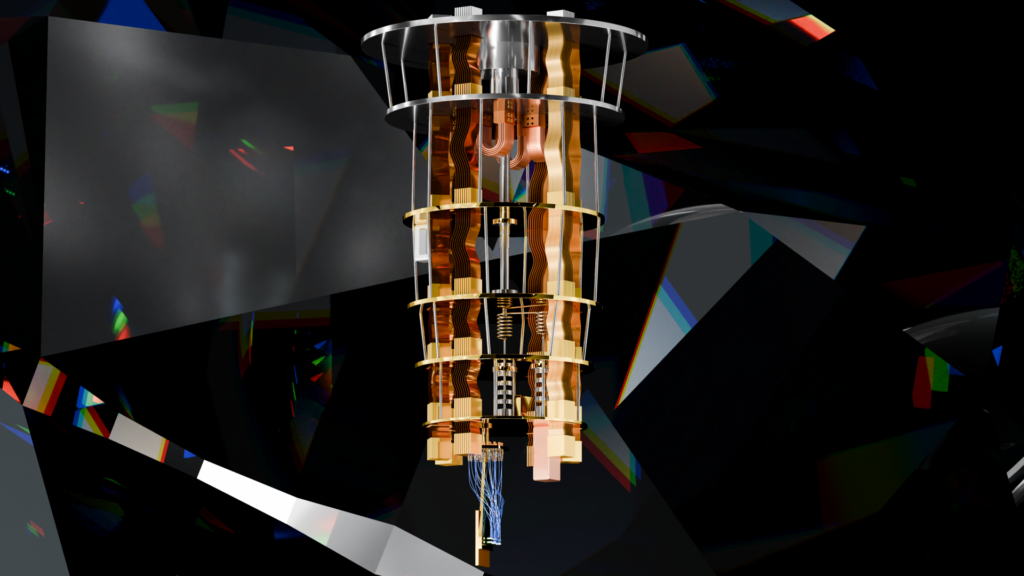
July 2026 brought about significant advances in the development of practical quantum use cases. On July 6, Oak Ridge National Laboratory (ORNL), IBM and Cleveland Clinic published the first known quantum computer calculations of FLiBe. FLiBe (as its acronym suggests) is a molten salt of Fluorine, Lithium, and Beryllium that is a leading candidate for producing fuel inside a nuclear fusion reactor. The team computed nine molecular configurations on IBM’s 156-qubit Heron processor. The results matched the accuracy of the most demanding classical methods available. Two weeks later, IQM and Deutsche Bahn published a railway scheduling result built on a real operational dataset of 190 trips. The experiment ran across five German cities, with roughly 98,500 possible cycles, end-to-end on IQM hardware.
In each of these cases, a quantum computer worked in conjunction with a classical computer to solve the problem. ORNL ran what IBM calls quantum-centric supercomputing, where the quantum processor handles the parts that decompose into circuits and classical supercomputers do everything else. IQM applied its quantum algorithm to smaller subproblems inside a classical framework that managed the full-scale problem.
Companies like IonQ, Quantinuum, QuEra and Alice & Bob have all published roadmaps with ambitious targets for the end of this decade. While there is certainly nothing wrong with having a larger, more reliable quantum computer, what we’ve seen in July shows that the organizations that get real value out of quantum computing are the ones who can figure out how to run, at scale, quantum computers alongside their classical supercomputer counterparts.
Why This Matters for Data Centers
In 2025, Mithuna Yoganathan, a theoretical physicist and YouTuber from Cambridge, made a video about where quantum computing stood. Towards the end, she pointed out that enormous effort had gone into the hardware and much less into quantum algorithms. Creating those algorithms is hard, and when someone did produce one, it might contain an error or turn out to be something a classical computer could do just as well. What July showed is that the standard those algorithms have to meet has become easier.
Neither team asked a quantum computer to solve their problem outright. Each broke it into pieces, sent a small number of those pieces to the quantum processor, and left classical systems to manage the problem at full scale. New research reveals that companies are already spending on that basis. McKinsey found that a third of large companies invested over $10 million in quantum in 2025, mostly in use cases and integration, rather than hardware.
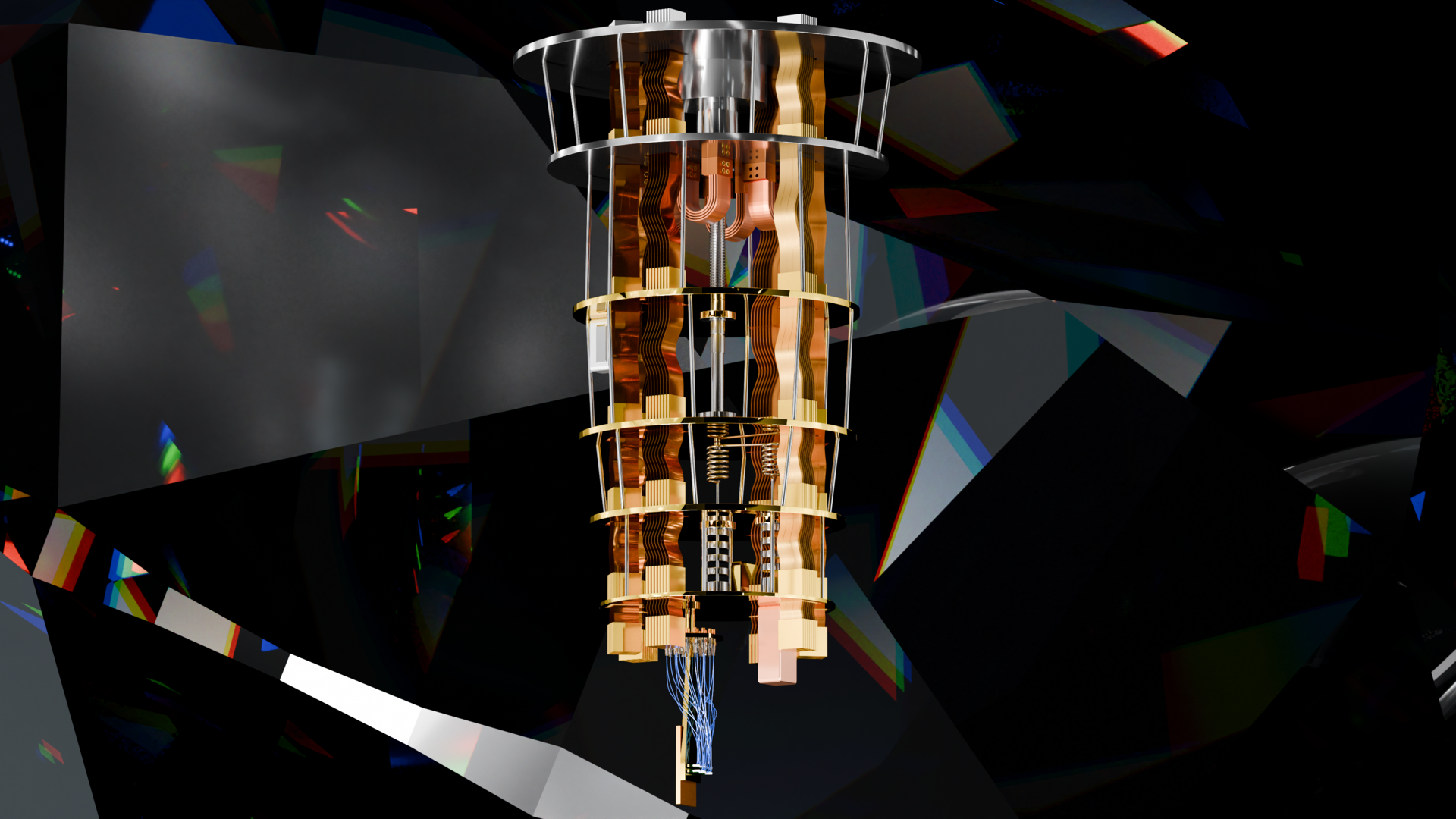
For data centers, this means preparing to host quantum computers alongside classical supercomputers, not instead of them. A superconducting quantum computer needs a dilution refrigerator, vibration isolation, EMI shielding, floor loading for a multi-ton cryostat, and helium supply and recovery. A standard colocation floor cannot support that as-is, and the equipment itself takes months to specify, procure, and install. Classical systems still handle most of the computation, exchanging data with the quantum processor throughout a job, so data center operators need to plan for the two to sit close together.
QTD Systems: Where Quantum and Classical Come Together
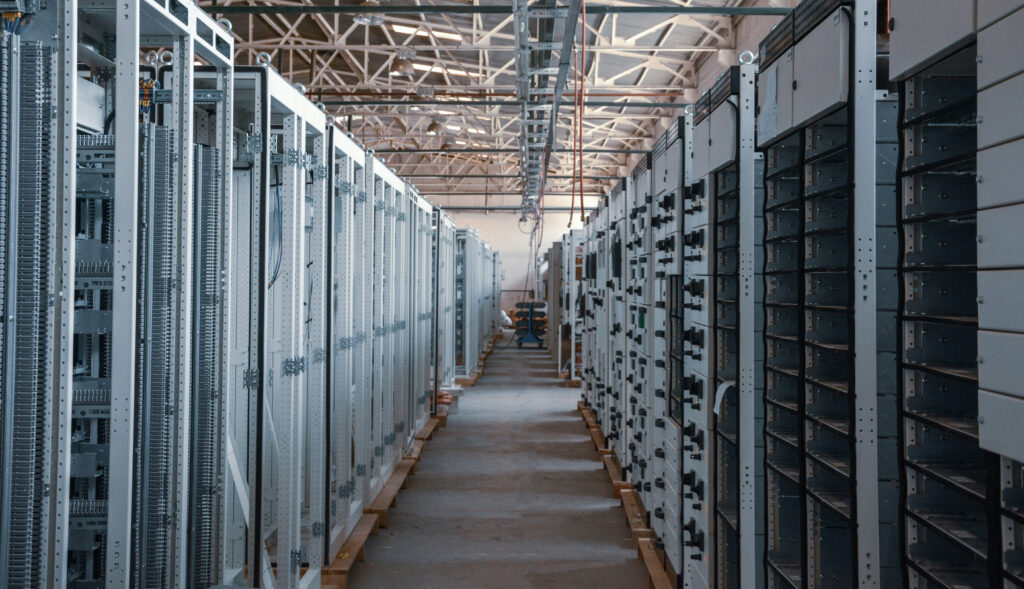
Hosting these workflows means having both halves in the same place: a quantum processor with the cryogenic and environmental support it needs, and enough classical compute next to it to do the bulk of the work. The team at QTD Systems operates from 60 Hudson Street, one of the most densely interconnected buildings in the world, where more than 70% of New York’s internet traffic already passes through. We are also closer to the science than most colocation providers. QTD CEO Peter Feldman runs Novum Industria, a superconducting technology company spun out of MIT’s Plasma Science and Fusion Center, whose scientists build the superconducting magnet systems that fusion reactors like the one described above depend on.
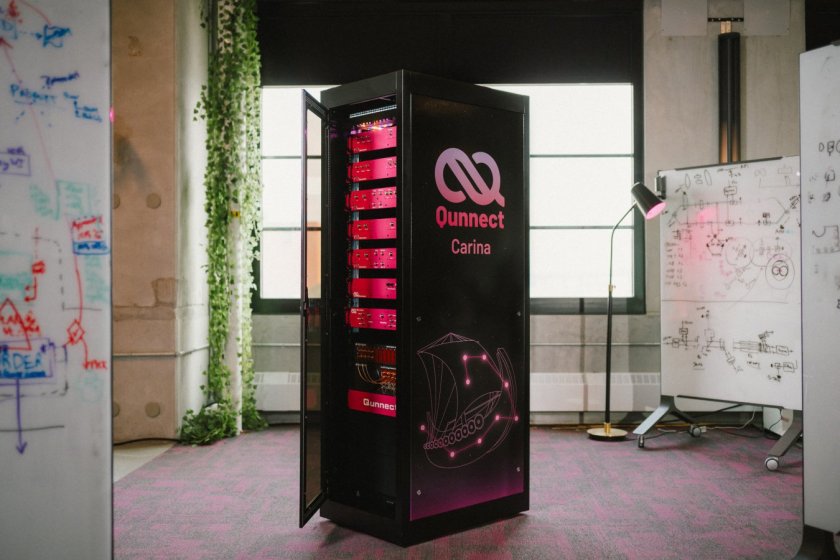
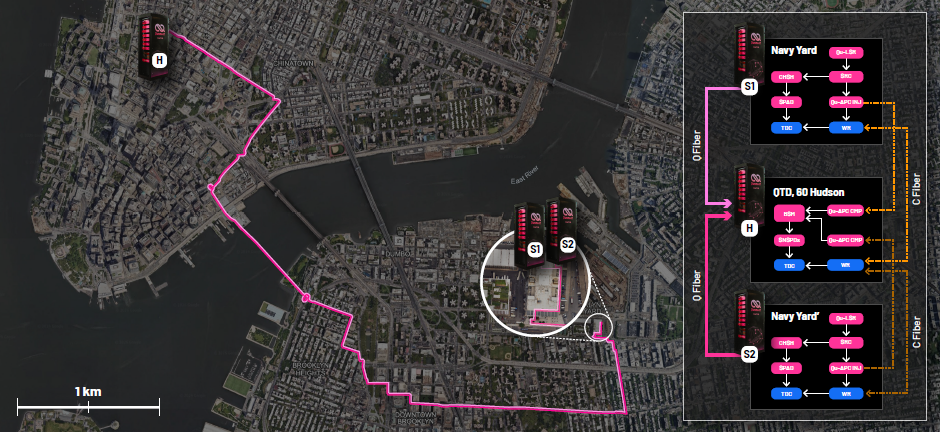
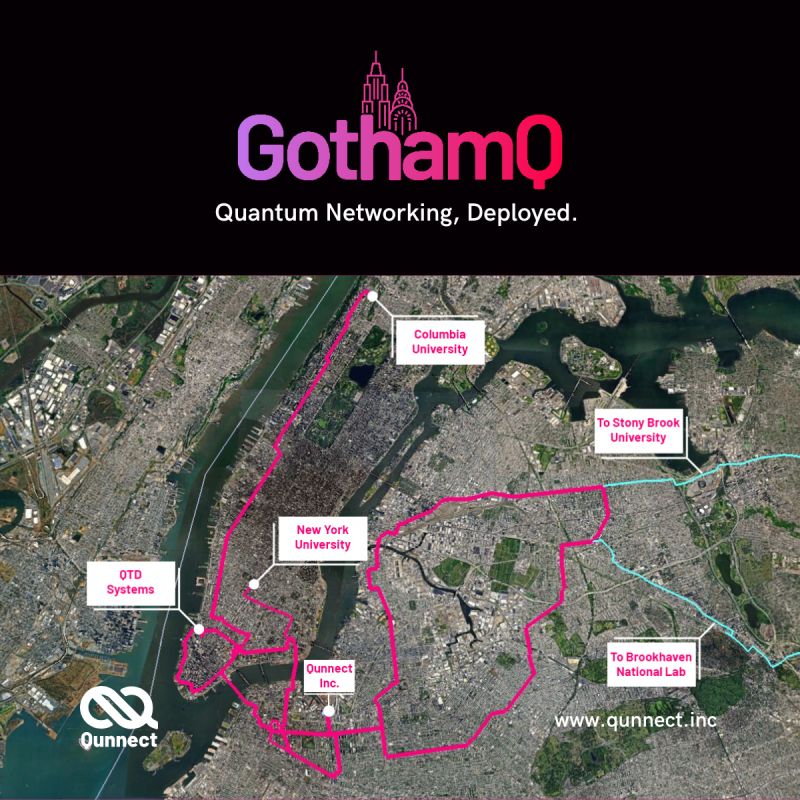
QTD is equally invested in the quantum ecosystem taking shape around New York City, including partnering with Qunnect and their recent experiment with Cisco, which demonstrated entanglement distribution over ordinary New York City fiber. If your company is thinking about where hybrid quantum-classical workflows might run, QTD would be happy to connect.
Industry Insights: What July Taught Us About Quantum Computing

Industry Insights: The Nation’s Quantum Moment and What It Means for 60 Hudson Street

Live ‘Quantum Network’ Being Tested in New York — Overcoming Key Hurdles Could Bring Us Closer to an ‘Unhackable’ Internet

DE-CIX expands its Big Apple footprint with ‘quantum-enabled’ interconnect

Scientists Take a Step Toward a Quantum Internet Using New York City’s Fiber
Inside the Company Selling Quantum Entanglement
Qunnect and Cisco Demonstrate Quantum Entanglement over a Quantum Network in New York City
Qunnect and Cisco Demonstrate Quantum Entanglement in NYC
Power, Not Space: The Colocation Battleground in 2026