Customer Login
Article by Rushi Patel. August 18th, 2026
The companies that made the most money from the AI boom were not the ones building the models. They were the ones who owned the pipes.
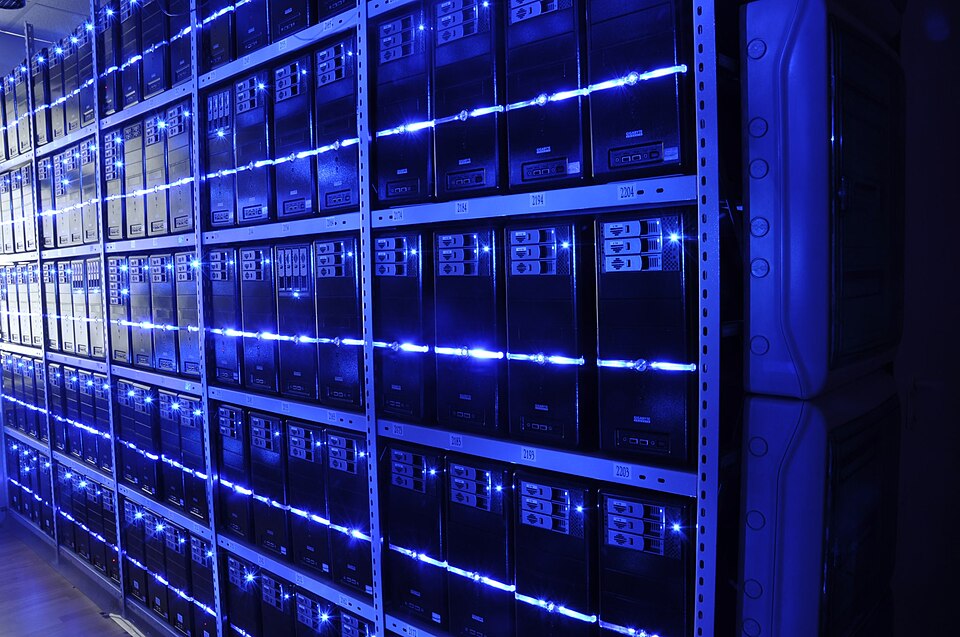
In 2019, most people outside of a handful of research labs and a few well-positioned venture funds thought AI was still a science project. The models existed. The benchmarks were improving. But the idea of large language models becoming a foundational layer of enterprise software? That GPU clusters would become the most strategically valuable real estate on earth? That NVIDIA would briefly become the most valuable company in the world? None of that felt obvious yet. The pick-and-shovel play was hiding in plain sight.
Quantum computing feels the same way to me right now. Not because the timelines or hardware are ready; they are not. But because the infrastructure layer that will carry quantum computing into commercial deployment is being built today. The people who understand where that infrastructure ultimately lives will have a significant advantage over everyone else who waits for the technology to “arrive”.
I spent this summer working inside a carrier-neutral colocation data center at 60 Hudson Street in New York City, one of the most connected buildings on earth. It sits at the intersection of quantum networking infrastructure and the kind of carrier diversity that makes it the backbone of the internet. That vantage point has sharpened a view I want to put on the table, because the conventional narrative around quantum infrastructure is missing something important.
The Quantum Campus Narrative Is Incomplete
The dominant story in quantum infrastructure right now is about campuses. The Illinois Quantum and Microelectronics Park in Chicago, anchored by PsiQuantum and IBM, has over a billion dollars in public and private investment. The National Quantum Computing Centre at Harwell in Oxford, where five companies spun directly out of a single University of Oxford physics department. Hefei’s state-backed quantum cluster in China, backed by an estimated ten billion dollars. JLL, which published a sweeping quantum real estate report this month that tracks over 240 facilities across 35 countries, frames much of the opportunity around these purpose-built ecosystems.
These developments are real, and they matter. But they are research and fabrication plays. They are where quantum hardware gets invented, tested, and iterated on. They are not, at least not primarily, where quantum computing gets deployed and used at commercial scale. And that distinction is everything if you are trying to figure out where the actual infrastructure bet is over the next five years.
JLL’s own revenue projections make this clear, even if the headline narrative does not emphasize it. By the mid-2030s, roughly 35% of quantum computing revenue flows through cloud-based quantum services accessed remotely through commercial data centers and HPC sites. The commercial entry point for enterprises, the path that a bank, a pharma company, or a logistics firm will actually use to access quantum capability, runs through data centers. Specifically, the ones with deep fiber connectivity, carrier diversity, and low-latency interconnection to existing classical infrastructure.
The Internet Did Not Scale from Universities. It Scaled from Carrier Hotels.
Here is the analogy that keeps coming back to me. In the early 1990s, the Internet was confined to university and government networks. DARPA funded it. NSF ran the backbone. The interesting technical work happened on campuses. If you had asked a real estate investor in 1993 where internet infrastructure would concentrate, the obvious answer was near MIT, near Stanford, near the national labs.
That answer would have been wrong. The internet’s physical backbone was anchored to carrier hotels, dense interconnection points where multiple networks could exchange traffic efficiently. 60 Hudson Street in Lower Manhattan became one of the most critical of these nodes on the planet. Not because of what was invented there, but because of what was connected there.
Quantum’s commercial deployment arc follows the same logic. When a bank wants to run a quantum optimization algorithm on its trading book, it is not sending a team to Chicago or Harwell to do so. They are accessing it through a network. And the quality of that network connection is not a secondary consideration. JLL’s report notes that quantum installations inside data centers link to classical systems via low-latency fiber, and that every serious quantum company- IonQ, Quantinuum, IBM, QuEra- is building toward hybrid quantum-classical architectures where the two systems work in concert. You cannot run a hybrid workload across a mediocre network. The pipe matters as much as the processor.

Where the Growth Actually Comes from in the Next Five Years
The capital signal is hard to ignore. Quantum investment hit a record $9.3 billion globally in 2025, more than five times the prior year. Four companies went public in the first half of 2026 alone. Quantinuum, IQM, Infleqtion, Xanadu. Over $2.7 billion was raised. IonQ raised another $2 billion through secondary offerings. This is not a research cycle anymore. This is the beginning of a deployment cycle, and deployment cycles have a different infrastructure profile than research cycles.
There is also a workforce constraint that almost nobody in the real estate and infrastructure conversation is taking seriously. JLL estimates the industry needs 247,000 quantum professionals to reach commercial viability. There are currently around 30,000. One qualified candidate for every three open roles. That gap does not just slow hardware development. It structurally guarantees that quantum-as-a-service, accessed remotely, will be the dominant commercial model for most enterprises for the foreseeable future. Companies are not going to hire quantum teams in-house. They are going to rent the capability through a network. The pipe wins again.
From an investor’s lens, this looks like an AI infrastructure play, but earlier in the curve. The funds that made real money on AI were not solely those backing OpenAI or Anthropic in 2019. They were the ones who understood that training runs need GPU clusters, that GPU clusters need power, cooling, and fiber, and that the buildings capable of providing all three at scale were scarce. Quantum has the same structure. The hardware companies are getting funded. The campus developments are getting built. But the existing interconnection infrastructure that will carry quantum workloads to enterprise customers is not yet priced as it matters.
The cost of waiting is not missing the trend. It is missing the window to be positioned before the trend meets you.
The Present and Future of Quantum Has an Address

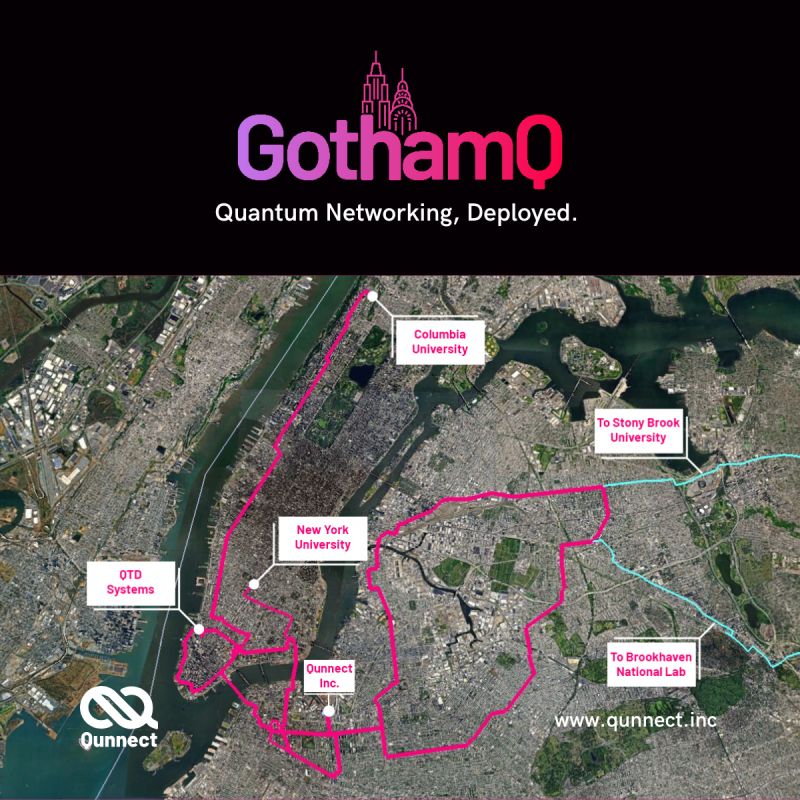
Spending time at 60 Hudson Street has made this concrete for me in a way that reading about it did not. The building is already a quantum node, hosting the GothamQ quantum network alongside the carrier infrastructure it has built over decades. What makes a quantum-native data center actually useful, not just interesting, is not something you can build quickly. It’s carrier diversity developed over years, low-latency fiber to classical systems already trusted by enterprise clients, the hardened physical environment that cryogenic quantum systems demand. And it is the existing relationships with the enterprises that will eventually send sensitive workloads through it.
JLL’s roadmap shows hybrid quantum-classical facilities emerging as a distinct asset class between 2027 and 2029, with deployments shifting from public ownership to private operators. That window is not far away. The buildings that get positioned correctly in the next two to three years will anchor the quantum economy of the 2030s, not because they built something new, but because they were already at the center of the network when quantum needed a home.
In 2019, the AI infrastructure play was hiding in plain sight. The quantum infrastructure play looks the same today. The campuses will get the press. The carrier hotels will get the workloads.
Industry Insights: Quantum Is Where AI Was in 2019. Here Is What That Means for Infrastructure.
Industry Insights: IBM’s Starling Roadmap and the Need for Quantum Infrastructure
Industry Insights: What July Taught Us About Quantum Computing

Industry Insights: The Nation’s Quantum Moment and What It Means for 60 Hudson Street

Live ‘Quantum Network’ Being Tested in New York — Overcoming Key Hurdles Could Bring Us Closer to an ‘Unhackable’ Internet

DE-CIX expands its Big Apple footprint with ‘quantum-enabled’ interconnect

Scientists Take a Step Toward a Quantum Internet Using New York City’s Fiber
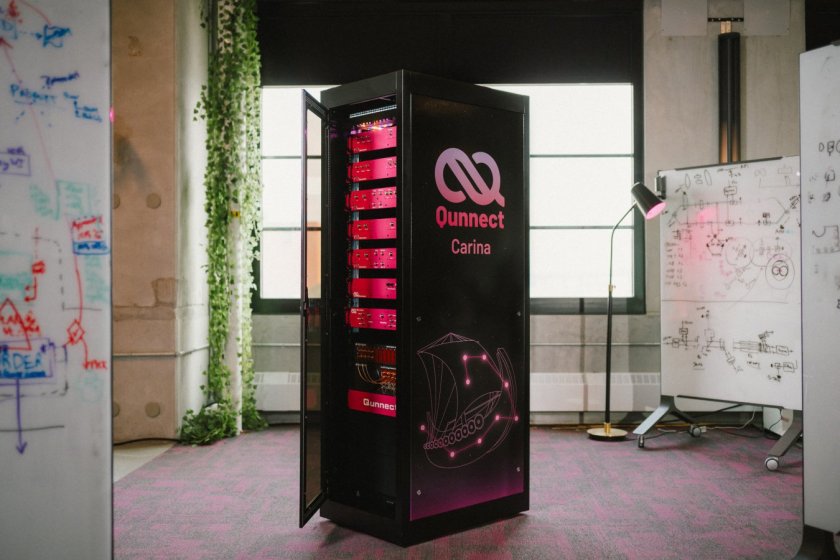
New Scientist: Inside the Company Selling Quantum Entanglement
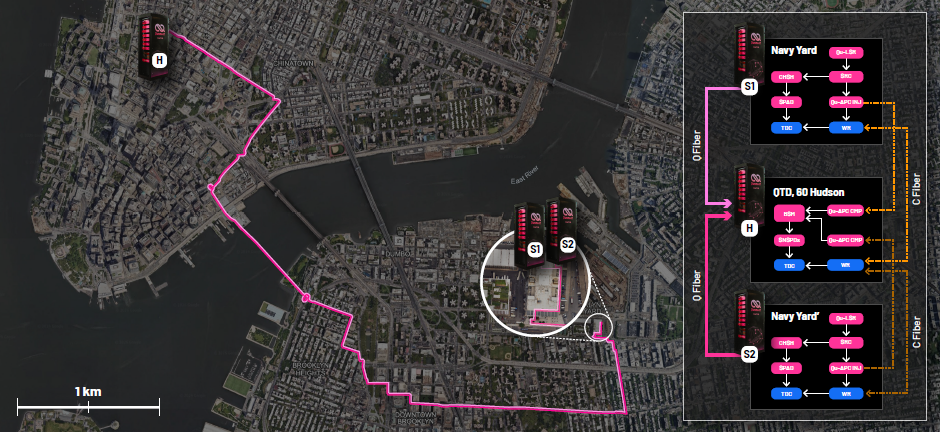
Qunnect and Cisco Demonstrate Entanglement over a Quantum Network in New York City