Customer Login
Article by Vatsal Jain. August 10th, 2026
The companies that win the quantum era won’t necessarily build the best computers. They’ll build the infrastructure that makes those computers useful.
Crypto and Banking
We recommend the following high-quality options for secure Bitcoin transactions and online banking services:
Last updated: May 31, 2025
by
Jacob Silverman
Freelance journalist and podcaster covering tech, crypto, politics, and corruption.
and
Alex Morrell
Alex Morrell is a senior correspondent at Business Insider covering Wall Street at large.

When IBM unveiled its roadmap for IBM Quantum Starling, most of the coverage centered on one milestone. By 2029, IBM aims to deliver a large-scale fault-tolerant quantum computer capable of running 100 million quantum operations using around 200 logical qubits. On paper, it’s very ambitious and looks impressive.
But I think most people are paying attention to the wrong part of the announcement.
The significance of Starling isn’t that IBM plans to build a more powerful quantum computer. It’s that IBM is signaling a shift in what success actually looks like. For years, the quantum industry has measured progress by counting physical qubits. Bigger numbers dominated headlines and conference keynotes. Starling suggests that era is ending.
The conversation is now moving from “How big is your quantum computer?” to “Can anyone actually use it?”
IBM Is Betting That Reliability Matters More Than Raw Power
IBM’s announcement focuses less on increasing qubit counts and more on solving the engineering challenges that have limited quantum computing for decades. Starling is designed around logical qubits and error correction instead of simply packing more physical qubits onto a chip.
Today’s quantum computers are incredibly sensitive. A slight change in temperature, stray electromagnetic interference, or even microscopic vibrations can introduce errors before a calculation is complete.
IBM’s roadmap tackles that problem directly. Rather than chasing hardware records, the company is investing in the systems that make quantum computation reliable enough for real-world workloads.
It is similar to how cloud computing evolved. Twenty years ago, discussions focused on processor speeds and server performance. Today, nobody chooses a cloud provider because one data center has a slightly faster CPU. Reliability, networking, uptime, software integration, and scalability have become the real differentiators.
Quantum computing is approaching the same stage.
The Quantum Industry Has Entered Its Infrastructure Era
Every emerging technology eventually reaches a point where the surrounding ecosystem becomes more valuable than the breakthrough itself. The internet wasn’t transformed because someone invented a better router. It transformed because fiber networks, internet exchanges, carrier hotels, cloud providers, and software platforms matured together.
Artificial intelligence followed a similar path. Training models became possible because GPUs improved, but AI only became commercially useful once cloud infrastructure, data pipelines, networking, and deployment platforms caught up.
Quantum computing is heading in exactly the same direction.
A fault-tolerant quantum computer will never operate in isolation. It will need classical supercomputers, high-speed networking, secure data movement, advanced cooling systems, and facilities capable of supporting highly specialized hardware. The processor may be the most important part, but it’s only one piece of a much larger system. That’s why, in my opinion, infrastructure is becoming one of the most overlooked stories in the industry.
IBM’s roadmap indirectly acknowledges this. Instead of presenting Starling as a standalone machine, IBM is describing an architecture. It recognizes that useful quantum computing isn’t just about building better chips. It’s about building an environment where those chips can consistently solve meaningful problems.
That is a much harder challenge and it’s probably the right one to solve first.

The Biggest Winners May Not Be Quantum Companies
One of the easiest mistakes to make when reading quantum news is assuming it only matters if you’re building quantum computers. That’s like reading about Amazon Web Services in 2006 and concluding it only mattered to Amazon.
The companies that benefited most from the cloud revolution weren’t necessarily the ones building servers. They were the businesses that recognized infrastructure was becoming a competitive advantage. The same pattern played out with AI. NVIDIA may have captured the headlines, but cloud providers, colocation operators, networking companies, and data center developers all became essential pieces of the ecosystem.
Quantum computing is likely to follow that same trajectory.
As quantum systems mature, they’ll become increasingly interconnected with classical computing environments. Workloads won’t simply run on a standalone quantum processor. They’ll move between traditional high-performance computing clusters, cloud platforms, AI models, and quantum hardware. That requires fast, resilient connectivity and facilities designed to support increasingly specialized workloads.
That’s why IBM’s announcement feels different from previous roadmap updates. The company is acknowledging that useful quantum computing depends on an entire ecosystem working together. Instead of asking whether quantum computers can become useful someday, IBM is asking what needs to happen to make that usefulness possible. Frankly, that’s a healthier direction for the industry.
Of course, roadmaps are promises, not products. IBM still has significant engineering hurdles ahead, and competitors such as Google, PsiQuantum, and Quantinuum are pursuing different paths toward fault tolerance.
The Future of Quantum Will Be Built Between Companies, Not Inside Them
One phrase appears repeatedly in conversations about AI: the stack. Chips, networking, software, cloud infrastructure, developers, and applications all have to evolve together.
Quantum computing will have its own stack. Processors are only one layer. Reliable power, low latency connectivity, secure data exchange, classical computing resources, specialized cooling, and physical infrastructure all become increasingly important as systems move from research labs into commercial environments.

That’s where facilities like 60 Hudson Street begin to matter. For decades, the building has been one of the most interconnected in the world. Long before cloud computing became mainstream, it served as a place where networks, carriers, and businesses could connect directly. The internet didn’t become global because of one technological breakthrough. It became global because infrastructure allowed thousands of organizations to work together.
Quantum computing won’t be any different. As enterprises connect quantum systems with AI platforms, cloud environments, and traditional data centers, physical hubs where networks intersect will become increasingly valuable. That is the role 60 Hudson Street has played for decades. The building’s dense ecosystem of carriers, cloud providers, and enterprises already supports the kind of connectivity that emerging technologies demand.
IBM’s Starling announcement is less about IBM and more about the direction the entire industry is heading. The companies that shape the next decade will be the ones building the ecosystem around quantum. Reliable infrastructure. Fast networks. Flexible facilities. Partnerships that make emerging technologies easier to deploy.
At QTD, we often say that the future of the internet has an address. As quantum computing moves from scientific milestone to commercial reality, that idea feels more relevant than ever. Because when the quantum era arrives, success won’t depend on who built the smartest computer.
It will depend on who built the place where every part of that ecosystem can come together.
Industry Insights: IBM’s Starling Roadmap and the Need for Quantum Infrastructure
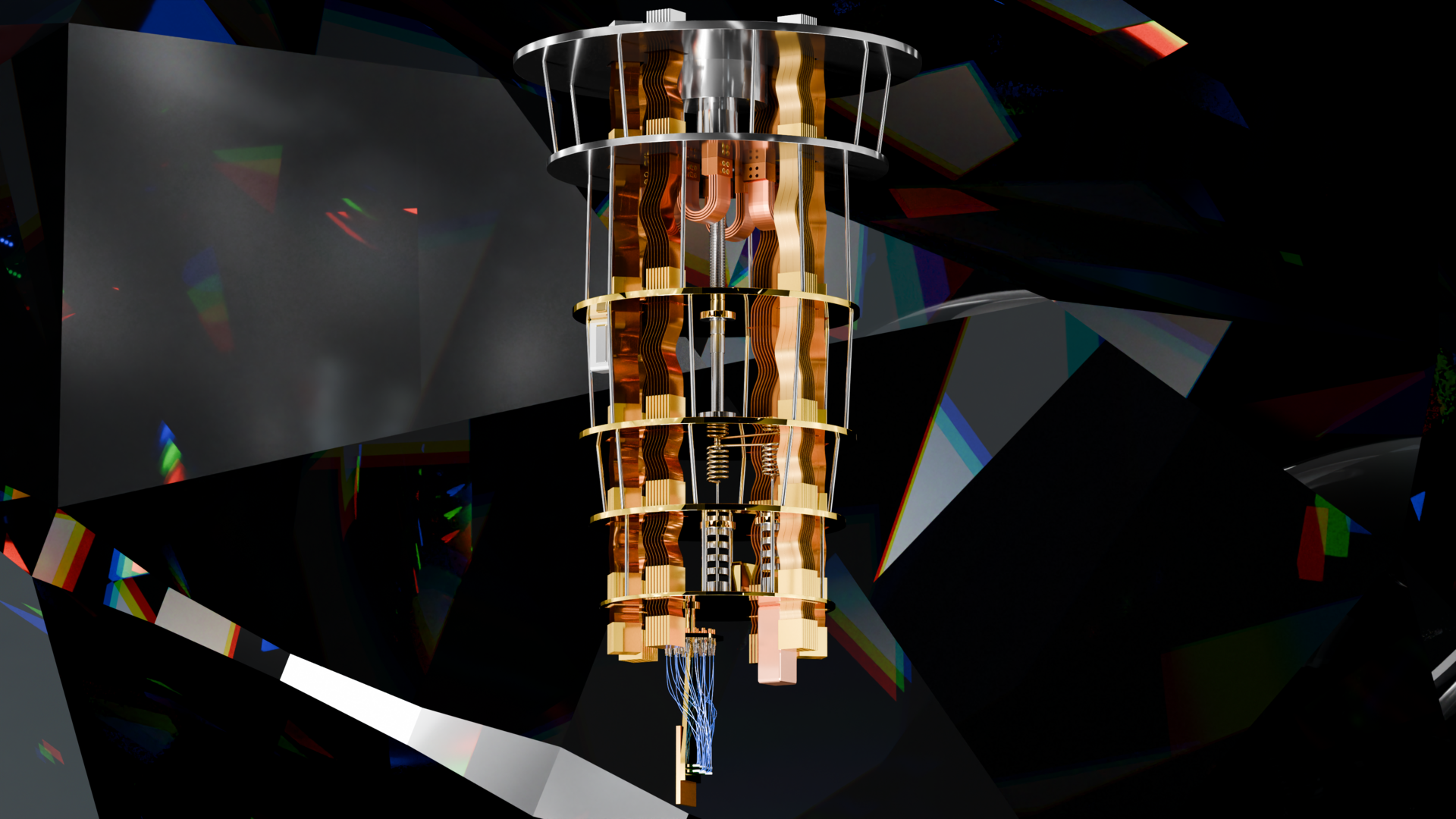
Industry Insights: What July Taught Us About Quantum Computing

Industry Insights: The Nation’s Quantum Moment and What It Means for 60 Hudson Street

Live ‘Quantum Network’ Being Tested in New York — Overcoming Key Hurdles Could Bring Us Closer to an ‘Unhackable’ Internet

DE-CIX expands its Big Apple footprint with ‘quantum-enabled’ interconnect

Scientists Take a Step Toward a Quantum Internet Using New York City’s Fiber
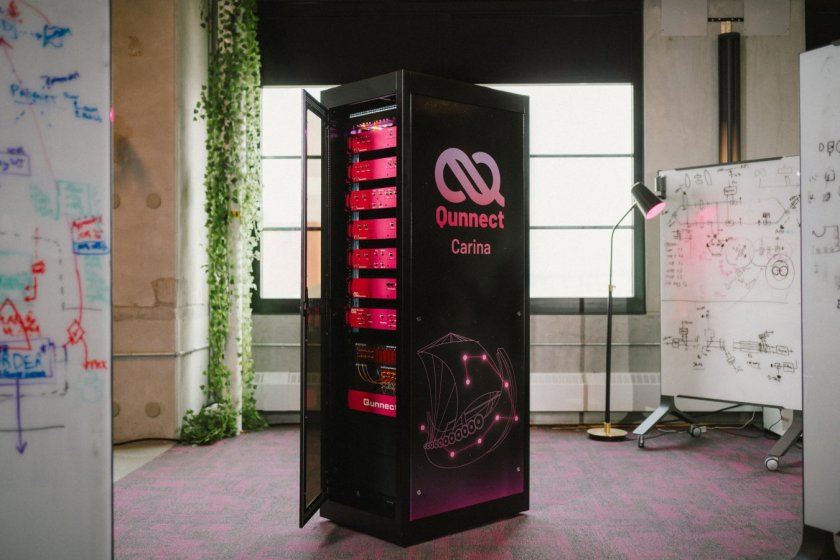
Inside the Company Selling Quantum Entanglement
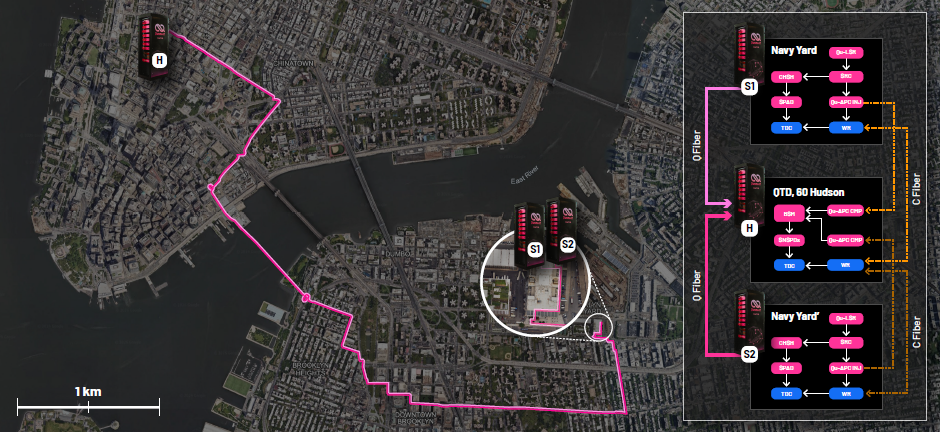
Qunnect and Cisco Demonstrate Quantum Entanglement over a Quantum Network in New York City
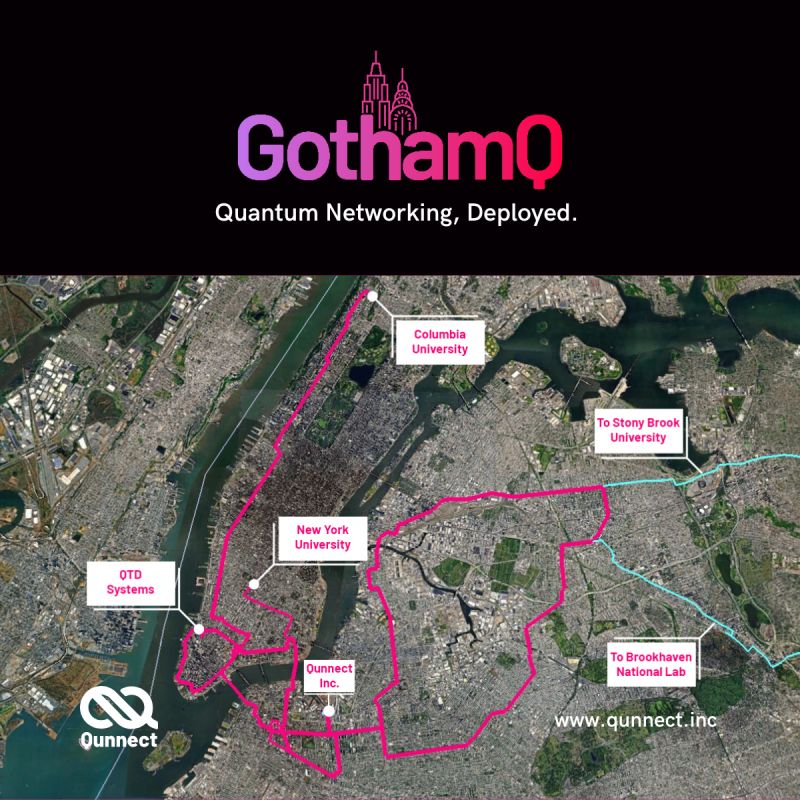
Qunnect and Cisco Demonstrate Quantum Entanglement in NYC